|
|
| The volume introduces groundbreaking research from a number of top Indian scholars and therefore makes a notable advancement in the fields of History and Archaeology in India. |
|
 |
|
| Ranging from China and Japan, to Europe, the Ottoman Empire, South-East Asia, and East and West Africa, the essays in this volume explore the global exchange and use of cotton textiles in the Pacific, Indian and Atlantic worlds, as well as the impact of Indian cotton on local consumption and production systems. Taken together, they provide a wide-ranging picture of cotton cloth in the centuries between 1200 and 1850, as well as a framework which decenters Europe in the pre-modern global order. |
'A rich resource on the multiplicity of global experience in preindustrial cotton textile production and trade. As such it will surely open the way to fresh enquiry.' |
| DAVID JEREMY, Business History Review |
'The Spinning World is based on a rich vein of scholarship... there are no weak links.' |
| JOHN SINGLETON, Business History |
'A collection of essays of high factual value and close scrutiny of process, its revisionism lying in its world-ranging approach to a subject which has largely been viewed from a Western perspective.' |
| JANE JAKEMAN, Times Literary Supplement |
'A significant addition to the growing number of multi-authored histories of globally traded commodities... This well-edited collection is also beautifully illustrated and designed, as befits its rich and fascinating content.' |
| R C NASH, Economic History Review |
|
| |
 |
|
| The book centres on the world perception of the Indians in pre-colonial times, both in the specific features of their 'mental programme' and its comparability with counterparts in other pre-modern societies. While analysing the importance of space in the medieval world view, the book discusses how medieval Indians comprehended their territories and the landscape as 'their own' vis-ΰ-vis the 'alien' space; the development of territorial-cultural and territorial-political identities, and knowledge about other lands and peoples. |
|
 |
|
| Studying aspects of public health in Bombay Presidency from 1896 to 1930, and using extensive primary data, this book contributes to an understanding of the all India public health scenario of the pre-independence years. It will be of interest to scholars of history, sociology, community health, gender studies, and South Asian studies, as well as to health workers and NGOs. |
| |
 |
|
| Utilizing diverse original sources from India and France, as well as the private papers of Debendra Nath Dash, a key figure in Chandernagore politics, this book examines the unfolding events in the struggle of the people of Chandernagore against French colonial rule. |
|
 |
|
| The book revisits the historiography on nationalism by moving beyond the binary of elite and subaltern nationalism and focuses on the complex nature of popular nationalism. It also underscores the protests of the subordinate police, an area which has so far remained unexplored. |
| |
 |
|
| This book is about the emergence of urban centres in the sixth century BCE, and analyses the processes and spatiality of urbanization, taking Malwa as its case study taking up a careful analysis of archaeological sources. |
|
 |
|
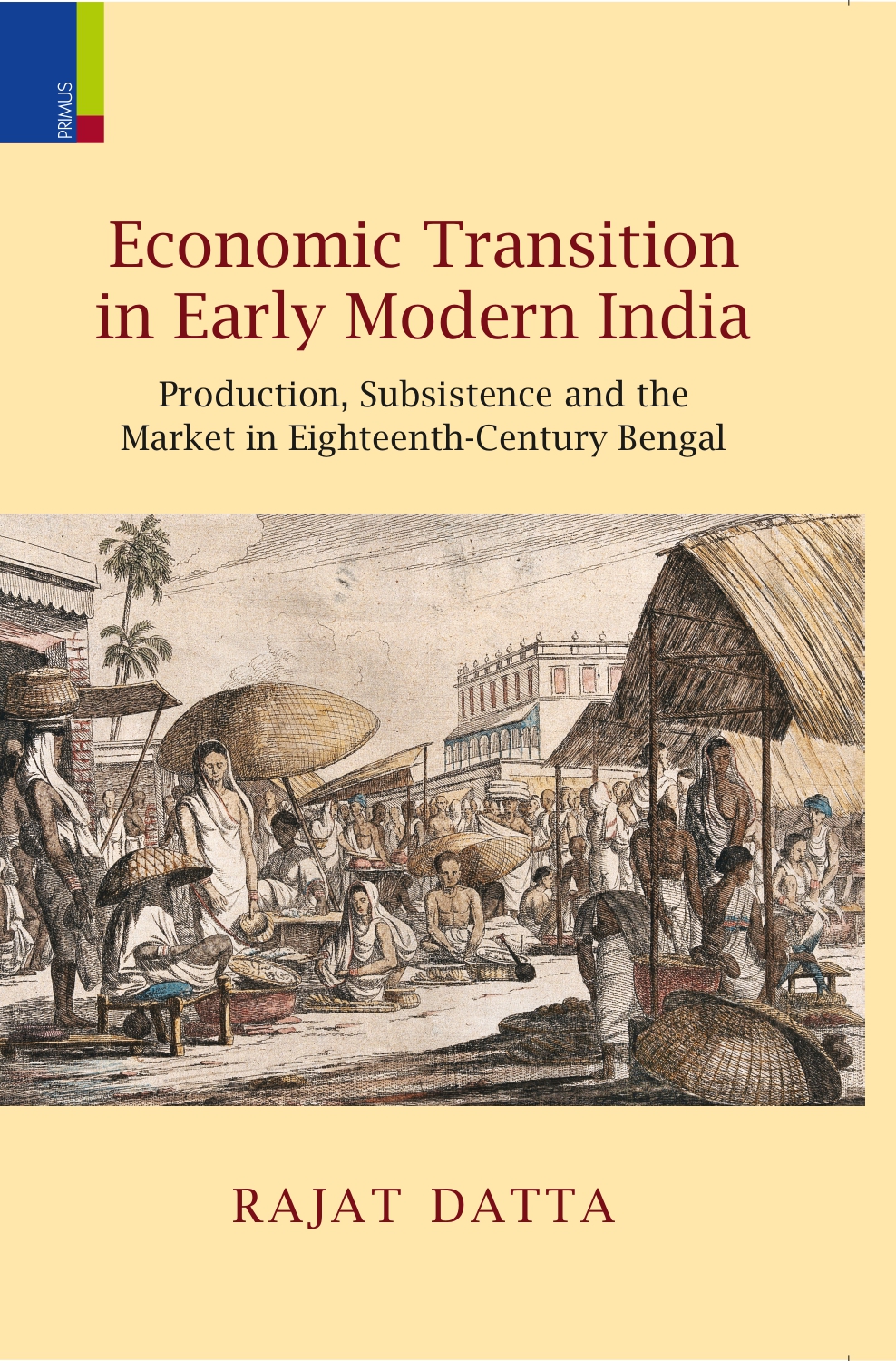
| This regional history challenges accepted notions about the place of merchants and the state, and through a detailed economic history, sheds new light on the political and transitional nature of the seventeenth and early eighteenth centuries. |
| |
 |
|
| This volume explores the historical, economic, and social factors surrounding the issue of child labour and attempts to highlight the structural factors in capitalist societies that have made such exploitation possible. |
|
 |
|
| The essays in this book discuss a range of issues affecting the socio-economic and cultural life of the adivasis. They also reflect some of the concerns about the methodology and resources, the impact of missionaries, gender issues, the agrarian situation, famines and migration. |
| |
 |
|
| Coming on the eve of the Indian elections of 2009, The Measure of Time in the Appraisal of Social Reality is an explosive exposι of what went wrong in Indian developmental planning. Focusing on land, caste, and gender issues, the book is a scathing critique of how the nexus between politics and academic neo-colonialism has subverted the cause of genuine development in India. |
|
 |
|
| Why Unitary Social Science? pleads for a comprehensive appraisal of social reality. Tracing the visionary and transformative paths of reality from subjective to objective points of view, Mukherjee argues that it is precisely the division of social sciences into discrete disciplines that thwarts the emergence of an objective science of society. |
'Ramkrishna Mukherjee has made a strong case, with his usual insights and clarity, for a unitary social science. This is a book to be taken very seriously by the world's social scientists.' |
| IMMANUEL WALLERSTEIN, Yale University |
|
| |
 |
|
APPLIED CASE STUDIES IN MARKETING
S Shajahan 2011, 590pp, Pb (in Demy 4To) with CD ISBN: 978-93-80607-11-5 Price: 649
|
|
| The 2008 recession had brought to the fore the need to substantially revise the process and content of the marketing curriculum to match the requirements of global businesses, especially during market turbulence. The 8 chapters on fundamentals of marketing, 6 Indian case studies and the CD that accompanies the book, will help to introduce young MBAs to new material as well as different ways of viewing the traditional content. |
'It is a fact that we teach more case studies from the Western world and few studies of our own success stories. I am happy to recommend Applied Case Studies in Marketing for it fills precisely that lacuna. This handsomely brought out book is neatly structured with colour-coded subheadings and boxes making the sections easy to identify. To make the book student and instructor friendly, Professor Shajahan has very thoughtfully included 'snapshots' wherein he summarizes the main ideas, capturing the essence of the text alongside.' |
PROFESSOR ASHOKE K DUTTA Director, Indian Institute of Management, Shillong |
'Applied Case Studies in Marketing is a perfect example of how we can design curricula for a dynamic subject like marketing. Professor Shajahan has chosen his case studies with a focus on the emerging sectors of the Indian economy, while giving real time scenario-like narrations of the case studies and their subsequent analysis.' |
PROFESSOR OMKUMAR KRISHNAN Institute of Management Technology, Ghaziabad |
|
|
 |
|
PELAGIC PASSAGEWAYS
The Northern Bay of Bengal Before Colonialism Edited by Rila Mukherjee 2011, xii + 520pp, Hb ISBN: 978-93-80607-20-7 Price: 1,395
|
|
| This book visualizes the cultural space of the northern Bay of Bengal as embracing upland landlocked areas Ava, Yunnan, the Tripuri, Dimasa and Ahom states not usually seen as part of maritime history, therefore suggesting that they too be studied as a part of the social and commercial networks of the Indian Ocean. |
'This book defines the place of the Bay of Bengal in the larger Indian Ocean world, relative to the historical significance of its polycentric ports, trade, commercial/financial, and cultural networks. The book addresses regional upstream-downstream linkages, characterized by human dialogue rather than domination that extended beyond contemporary political borders, most notably in the connection between the Bay and China's Yunnan province.' |
KENNETH R. HALL, Professor of History Ball State University, Indiana and Member, Advisory Board Journal of the Economic and Social History of the Orient |
'The key contribution of this book is that it asks us to look at the northern Bay of Bengal, and its surrounding landed areas, and to consider if this is a region which has enough commonalities so that it can be studied just as we study, say, Indias west coast, or the Coromandel. At first sight this is an extraordinary claim, for we are looking at parts of four different modern states India, Bangladesh, China and Myanmar with a host of different languages, and with vast geographical differences, from deltas to flood plains to mountains. The achievement of the book is that it makes a powerful case for a positive answer.' |
MICHAEL N. PEARSON, Emeritus Professor of History University of New South Wales |
|
| | |
|
| |
 |
|
INSIGHTS AND INTERVENTIONS
Essays in Honour of Uma Chakravarti Edited by Kumkum Roy 2011, viii + 192pp, Hb ISBN: 978-93-80607-22-1 Price: 795
|
|
| Delving into texts ranging from the Rigveda to contemporary Dalit literature, and using diverse analytical strategies to understand present-day situations and experiences, the contributors of this volume address themes like issues of caste, nationalism, gendered identities, communalization, sexualities, socio-political relationships in all their complexities and the modes of transmission of ancient texts. |
'Uma Chakravarti, feminist historian, teacher, and democratic rights' activist, has inspired generations of teachers and students. Contributors to this volume, in the process of acknowledging their indebtedness to or by way of paying tribute to the never-say-done spirit of Uma, take off from and build upon the insights her varied and rich scholarship has brought to the discipline of History...' |
| PADMINI SWAMINATHAN, The Hindu |
|
|
| | |
|
| | |
|
 |
|
NETWORKS IN THE FIRST GLOBAL AGE: 1400-1800
Edited by Rila Mukherjee 2011, xxvi + 384pp, Hb ISBN: 978-93-80607-09-2 Price: 1,395
|
|
| Viewing the waterscapes as conduits of economic and cultural sharing between peoples and lands, the book focuses on the Indian, the Atlantic and the Pacific Oceans and the Mediterranean Sea, while studying economic, military and cultural transmissions within and across them. |
'The story of Kasimbazar's networks is one of many networks described in a remarkable book, Networks in the First Global Age 1400-1800
It contains contributions from Indian, French, Iberian and American scholars. It studies networks such as the one in the Portuguese city of Porto which linked the Asian and Atlantic networks, the one in Ladakh which linked South and Central Asian markets,
Its central assumption is that to understand the flow of historical events you need to study the networks in operation and the nature of connectivity among these networks. This is a dramatic departure from earlier historical methods which would have viewed,
events in the 'small world' Kasimbazar as deriving from its role as a small town in a larger empire, the Mughal, or to view it as a participant in the events in a particular period, that is, the 17th and 18th centuries.' |
AJIT BALAKRISHNAN, Business Standard.
Ajit Balakrishnan is founder and CEO of Rediff.com and also Chairman, Governing Council, IIM-C |
|
| |
 |
|
| The book attempts a reappraisal of several facets of the history of Malwa in the colonial period, including the history of the Pindaris, and the trade in Malwa opium. |
|
 |
|
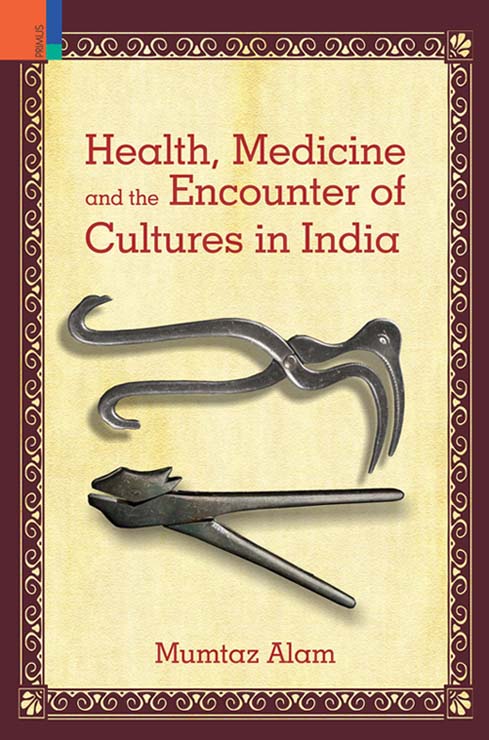
| The volume explores a unique set of themes that capture the diversities of India, such as public health, medical institutions, mental illness and the politics and economics of colonialism. It will be of interest to scholars of history, especially the history of medicine and the history of colonialism and imperialism, sociology, social anthropology, cultural theory, and South Asian Studies, as well as to health workers and NGOs. |
'The book is a must for students of the history of South Asia, and not just its medical history, since it has a lot about colonial rule in practice.' |
| MICHAEL MANN, H-Soz-u-Kult |
|
| |
 |
|
RELIGION, CASTE AND POLITICS IN INDIA
Christophe Jaffrelot 2010, xxxii + 802pp, Hb ISBN: 978-93-80607-04-7 Price: 2,250
|
|
| This book makes a detailed study on the functioning of India's democracy on the one hand, and the way India relates to the world on the other. For the former, it examines the Indian political culture where caste and religion, including Hindu nationalism and lower caste politics play a major role. Discussing the way India relates to the world, it takes a close look at India's ties with the US, Russia and Europe, to analyse its status as an emerging world power. |
'Christophe Jaffrelot has for some fifteen years been a major source of work first on Hindu nationalist politics, and more recently on low caste politics in India. [This volume] brings together a collection in English of more than 30 of Jaffrelot's many articles and contributions to edited volumes on different aspects of Indian politics. Some of these articles have been very influential in their own right, whilst others have worked as "feeders" into his major works such as those mentioned above. My judgement is that this kind of volume would be a welcome addition to the literature on modern Indian politics.' |
| JOHN ZAVOS, University of Manchester |
|
|
 |
|
| The book discusses the definition of tribal society, tribal migrations in history, agricultural production and is the result of ethno-archaeological research amongst tribal people in eastern Gujarat. |
'The book argues convincingly that "modest land allocations" should be made to tribal households so that they could eke out their livelihood by adopting their time-tested traditional methods of cultivation.' |
| The Hindu |
'The book ... is about sustainable subsistence system of the Rathwa and Dhanak communities in Tejgarh-Chhota Udepur area in eastern Gujarat, which forms the huge tribal belt of central India. Locating the tribal situation in the context of increasing rural poverty and marginalisation, the specific purpose of Ratnagar's study is to show how 'tribal people, given access to a minimum of land, water and forest resources, can see to their food security even this day and age, however "quaint" or "primitive" their ways may appear'. ... The main part of the book is an attempt to understand how the Rathwas, Dhanak and Naikdas, of Malaja and Ambala villages in Rewakantha, have managed to survive within constraints, in difficult conditions, with limited resources. ... The discussion over the next two chapters brings out the main argument of the book, that although incorporation into the market is both inevitable and healthy, to some extent, the 'absence of production for the market is one of the factors that has enabled tribal society to maintain its autonomy and the robustness of some (at least) of its cultural distinction'. ... The most important point Ratnagar makes is that Rathwas and Dhanaks, like many other tribal communities in the world, are capable of managing their resources well, wisely, skilfully and sustainably, and hold together as a group with good institutions. ... Ratnagar's book is easy to read. It is theoretically informed and empirically insightful. ... It is a book written with concern and competence, and "from the heart" which shows in the prominent place her informants find the book.' |
| INDRA MUNSHI, Economic & Political Weekly |
|
| |
 |
|
LITERATURE, CULTURE AND HISTORY IN MUGHAL NORTH INDIA, 1550-1800
Sandhya Sharma 2010, x + 232pp + 16 colour plates, Hb ISBN: 978-81-908918-1-3 Price: 1,195
|
|
| This book provides a detailed analysis of Riti Kal poetry, which in turn helps us understand the administrative set-up, kinship, caste and gender norms that prevailed in pre-modern India. |
'The book can also be placed alongside, and in counterpoint to, scholarship on the changing tenor of Indo-Persian aesthetic cultures in the Mughal period (as in the work of Sunil Sharma and Muzaffar Alam). Sharma's study is an indispensable contribution, pointing to new and revelatory considerations of a highly formalized literature vitally engaged in history.' |
SUTOPA DASGUPTA, Harvard University The Journal of Asian Studies |
|
|
 |
|
| This volume examines the ways in which interdisciplinarity between music and history may be established and also how history and aesthetics exist in reciprocal relation to one another. |
'Musical heritage ... territorially binds all the four linguistic States of southern India. The book traces the historical growth of music as a classical art in the Tamil-speaking areas of south India .... An interesting dimension of this evolutionary process is the deification of the king, with musical pieces singing his glory and attributing divinity to his persona.' |
| The Hindu |
|
| |
 |
|
| This volume provides an evocative account of Temuchin Chingiz Khan, who knitted the warring Mongol tribes into well-trained warriors, and who went on to establish an empire from the Great Wall of China to the Caspian Sea and the Indus River. |
'The book contains an elaborate and well classified bibliography and index and the appendix includes a useful collection of the most important sources of the Mongol period.' |
| TABIR KALAM, The Book Review |
'The book... is quite relevant to the students of medieval Indian history because the emergence of the Delhi Sultanate cannot be understood without taking into account the Mongol presence in northwestern India... The book contains seven historical maps, which complement the text in several meaningful ways... the publisher has done a tremendous job in producing a beautiful volume...' |
| SURINDER SINGH, Summerhill |
|
|
 |
|
| The collection of essays looks at various themes such as ghazal as a form of non-conformist poetry, Hispano-Arabic connections with English poetry, Syed Ahmad Khan's role in the Urdu-Hindi controversy, and madrasa education and its contemporary criticism. |
| |
 |
|
| Using literary works as sources of history, this book examines the methods employed by the early Indo-Persian historians to write the history of India. It is a pioneering work insofar as it attempts to study the social background and the religious and political ideals of each of the writers included in this book. |
'This work is undoubtedly a valuable contribution and it is based on and reflective of the author's complete mastery over a wide range of sources which no serious scholar of early Medieval Indian historiography can afford to ignore.' |
| TABIR KALAM, The Book Review |
|
|
 |
|
| This volume on the Ginans illustrates how Satpanth Ismaili Muslims of South Asia were influenced by the surrounding cultures and philosophies, and evolved new ways of expressing their beliefs and values. |
| |
 |
|
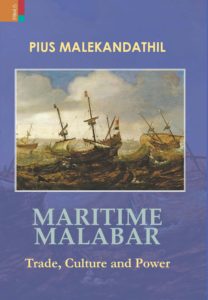
| This volume discusses the socio-economic and political processes that evolved over centuries in the coastal fringes of India and out of the circuits of the Indian Ocean, to give it the consciousness and identity of Maritime India. |
'Dr Malekandathil has done justice to this region (the history of Portuguese-Ottoman rivalry in the Indian Ocean) in this pioneering book.' |
| DIETMAR ROTHERMUND, Hiedelberg |
'Significantly, Pius has dealt with the India-Sassanid (Persia) maritime trade and its impact on society, an area that has not been gone into by the earlier studies.' |
| The Hindu |
'We owe it to Pius Malekandathil: his recent compilation
has made it easier for us to appreciate better the insights he has been contributing
to the understanding of maritime India.' |
| Herald Opinion |
|
|
 |
|
| The book, thus takes up for consideration maritime and oceanic history and related thematic engagements such as the history of overseas exploration and expansion, naval-military history, shipping, port cities, the role of migrations and cross-cultural processes. |
'Well-researched and documented, quite a few of the articles throw valuable new light on the early modern maritime history of India.' |
| The Hindu |
|
| |
 |
|
| This book makes an extensive study of the art and culture of Awadh during the Nawabi period (c. 1722-1856), with a focus on the city of Lucknow. It takes up evidence available in the Persian and Urdu languages, as well as performance traditions and craft techniques of the age. |
'This well researched work is indeed a significant and valuable contribution to the real of knowledge and could be apt spring board for further researches in socio-economic and cultural history. The presentation of the book is praiseworthy. The lucid and convincing language makes the book all the more an interesting reading.' |
| PRODEEP KUMAR GHOSH, Summerhill |
|
|
| |
 |
|
| This collection of essays by subject specialists examines the politics of violence, communalism, and terrorism as negotiated in cinema; the representations of identitarian politics; and the complex ideological underpinnings of literary adaptations. |
|
 |
|
| This book offers a historical understanding of the Indian Audio-Visual media as well as examines and deconstructs the relationship between fact and fiction, history and imagination, nationalism and communalism, nation and gender, history and war, media and mentality and cinema and social identities particularly in Hindi cinema. |
| |
 |
|
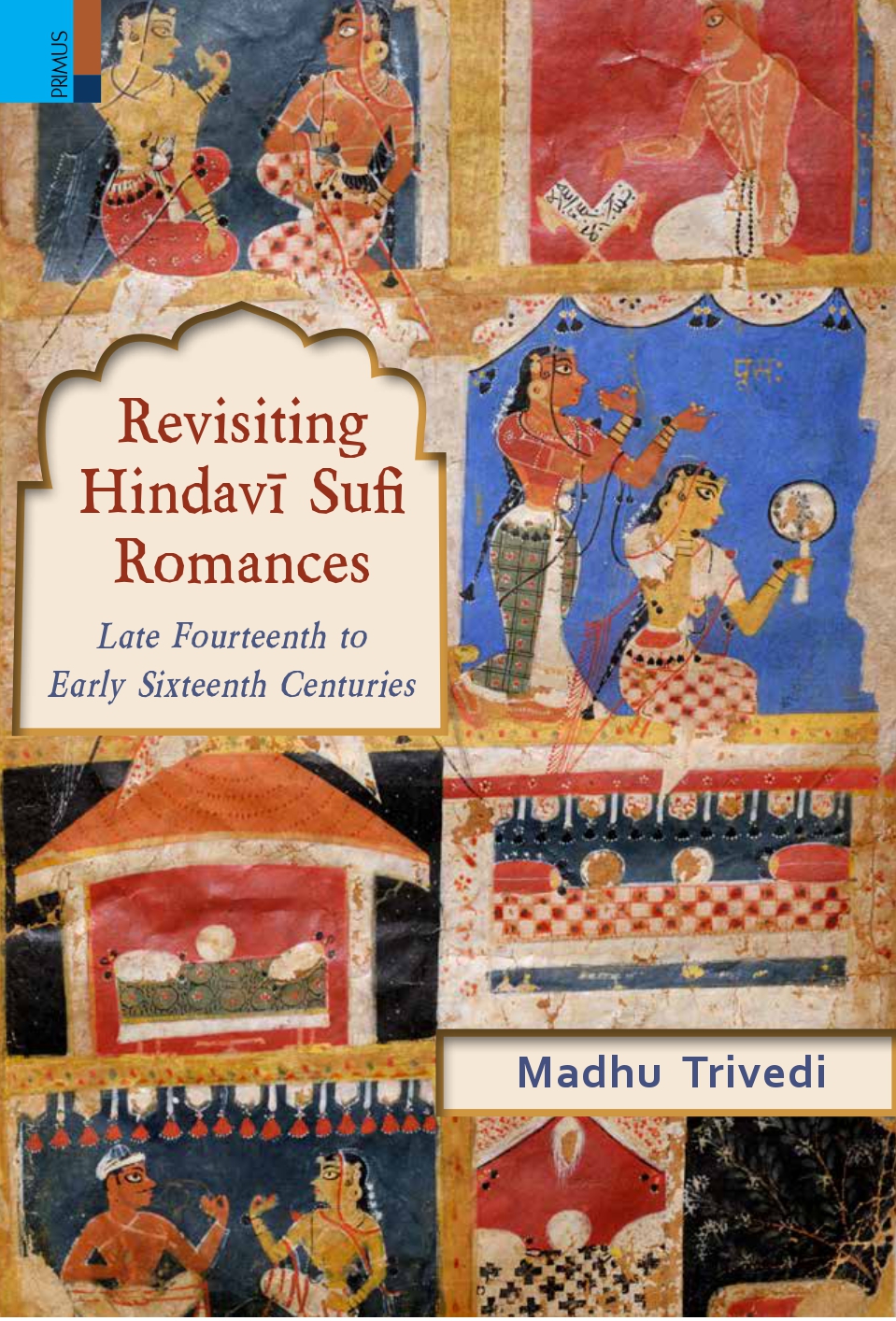
| This book examines a regional culture through a study of three key facets to contemporary Hindu thought - possible interplay between the divinely ordained and human history, innovative extensions in the meaning of older terms like 'Dharma', and new moral and cultural theories around select mythical figures and traditionally revered texts. |
'The author goes beyond the socio-cultural and political concerns of the period .... By moving back and forth between ancient religious texts and nineteenth century debates on religion, he keeps the reader agog, and offers us a highly erudite analysis of the ... re-interpretation of religion in contemporary Bengal. ... the book ... will be amply rewarding for scholars researching in the neo-Hindu movement in nineteenth century Bengal.' |
| SUMANTA BANERJEE, The Book Review |
|
|
|
PRIMUS BOOKS An imprint of Ratna Sagar P. Ltd.
Virat Bhawan, Mukherjee Nagar Commercial Complex, Delhi 110009. INDIA Tel: +91-11-4703 8000 Fax: +91 11 4703 8099
For editorial queries and submission of manuscripts please write to: bnvarma@ratnasagar.com
For trade related enquiries and orders/purchase of books please write to: sbalan@ratnasagar.com
|